
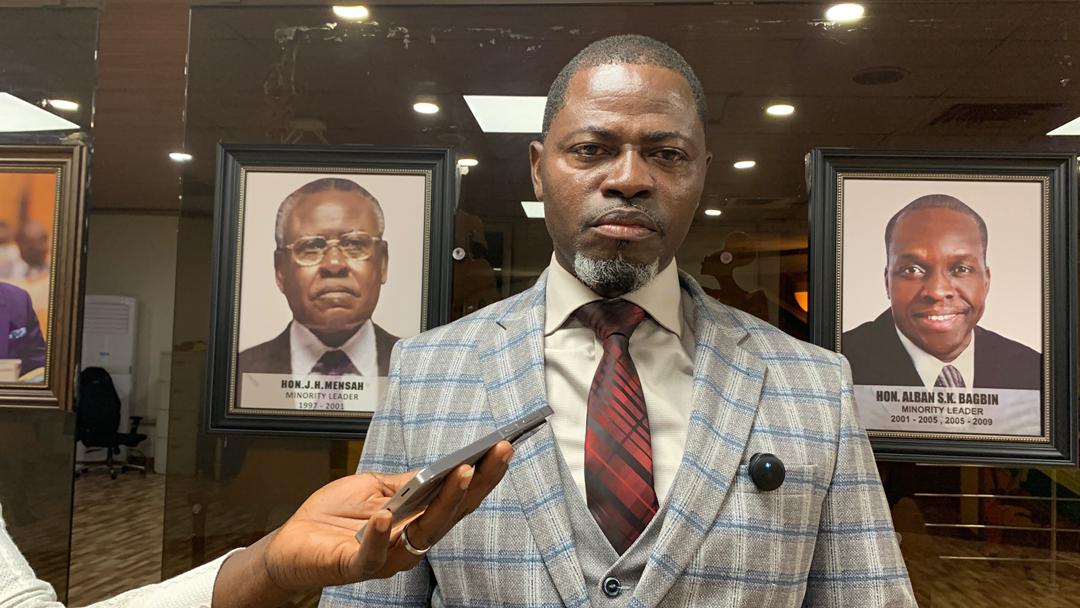

The Member of Parliament (MP) for Odododiodioo, Alfred Nii Kotey Ashie, has disclosed that the National Health Insurance Scheme (NHIS) is now sitting on excess funds exceeding GH₵22 billion, following the removal of the cap on the National Health Insurance Levy (NHIL) by the Mahama administration.
Contributing to the debate on the 2026 Budget presented in the 9th Parliament, the MP described the new financial position of the NHIS as unprecedented, arguing that the policy shift has restored the scheme’s
capacity to pay claims and fund critical healthcare delivery.
According to him, the previous administration under the New Patriotic Party (NPP) “crippled the NHIS” by capping the levy and redirecting dedicated health funds into the Consolidated Fund—an action he said created severe shortages, unpaid claims, and widespread rejection of NHIS cards at hospitals.
“Under the NPP, they capped the NHIL. What was meant for healthcare was taken away and used for other things. That decision made health insurance virtually useless because hospitals were not being paid and patients were turned away,” he stated.
Ashie said the 2026 Budget, presented by Finance Minister Dr. Cassiel Ato Forson on behalf of President John Dramani Mahama, is “a budget of hope” because it restores confidence in the health sector through the allocation of funds targeted at expanding access and improving service delivery.
He explained that the renewed financial strength of the NHIS was a direct result of the new government’s decision to uncap the levy and allow all funds meant for healthcare to remain in the sector.
“Today, because a visionary leader like President Mahama has uncapped the health insurance levy, we have excess money—over GH₵22 billion—available for healthcare. This is how you build a strong health system,” he added.
The Odododiodioo MP further highlighted key health initiatives contained in the 2026 Budget, including the construction of six new regional hospitals, one in each of the newly created regions, as part of efforts to close the health access gap. He also pointed to the training of 500 technicians for the National Ambulance Service and the recruitment of over 6,000 emergency response assistants, describing these as practical investments that will strengthen emergency care nationwide.
Ashie contrasted these developments with what he called the “inaction” of the previous government, accusing it of abandoning major health infrastructure projects.
“They left the La General Hospital to rot. They ignored the National Cancer Centre project. Today, all those projects are back on track under President Mahama,” he stressed.
He also welcomed the rollout of the Mahama Care initiative, designed to provide financial support for the treatment of cancer, hypertension, stroke and other high-burden diseases, calling it a bold step toward reducing catastrophic healthcare costs for vulnerable households.
The MP maintained that with the restoration of funds to the NHIS and renewed investment in infrastructure and personnel, Ghana’s healthcare system is poised for significant improvement.
“This budget is not just numbers—it is hope for the Ghanaian people, especially those who depend on the health insurance system for survival,” he concluded.