
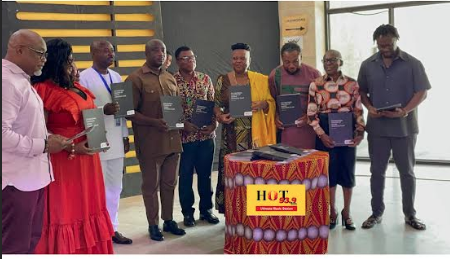

The National Theatre of Ghana has unveiled a 4-year strategic plan aimed at transforming the institution into a financially sustainable and digitally driven entity while safeguarding its national heritage mandate.
The plan would, among other things, focus on green production practices, leverage digital innovation, and build partnerships to expand its reach, relevance and engagement across local and global audiences.
Also under the plan for 2026–2030, the institution would be positioned as a centre of excellence for theatre education, creative skills development and talent incubation across all age groups and sectors.
Giving details of the document during a launch event in Accra yesterday, the Consultant, Dr Olubunmi Ajayi, said the plan was built on key pillars, including financial sustainability, innovation, partnerships and inclusivity, to reduce reliance on government funding by exploring new revenue streams such as digital platforms, cultural experiences and merchandise.
She said the plan would also focus on talent development through initiatives such as a proposed National Theatre Academy, youth programmes and partnerships with educational institutions.
Additionally, she said the plan would conduct research on the future of the performing arts in an AI-driven world, as well as launch a global fundraising initiative dubbed “Stages of Possibility” to support infrastructure, education and community outreach.
Repositioning theatre
The Minister of Tourism, Culture and Creative Arts, Abla Dzifa Gomashie, in a speech read on her behalf by the Director of Arts and Culture, Divine Kwame Owusu, commended the board and management for their commitment to reposition the National Theatre to reclaim its status as a premier hub for the development, promotion and global projection of the country’s cultural heritage.
She expressed confidence that implementing the plan would drive talent development, staff capacity building and stronger partnerships with the private sector, academia and creative communities.
She encouraged artists and creatives to take advantage of the institution’s opportunities and to showcase their talents and promote Ghanaian culture globally.
Collaboration
The acting Executive Director of the National Theatre of Ghana, Mr Henry Herbert Malm, said the strategic plan was developed through the combined efforts of the board and management, with support from professional consultants.
He said the collaboration helped develop the document as a guide to transforming the National Theatre into a more efficient, welcoming, and user-friendly space.
Artistic excellence
The Board Chair of the National Theatre of Ghana, Korkor Amarteifio, stated that the institution, founded in 1992, has nurtured generations of artists and creatives, making a significant contribution to the development of the creative industry and equipping individuals with vital skills.
She said it was crucial to position the theatre as a dynamic and inclusive hub for national expression to ensure it achieves its vision of making the arts accessible to all
Ms Amarteifio thanked the government for its support, particularly for its efforts to secure the theatre’s renovation to restore it to its former glory.