

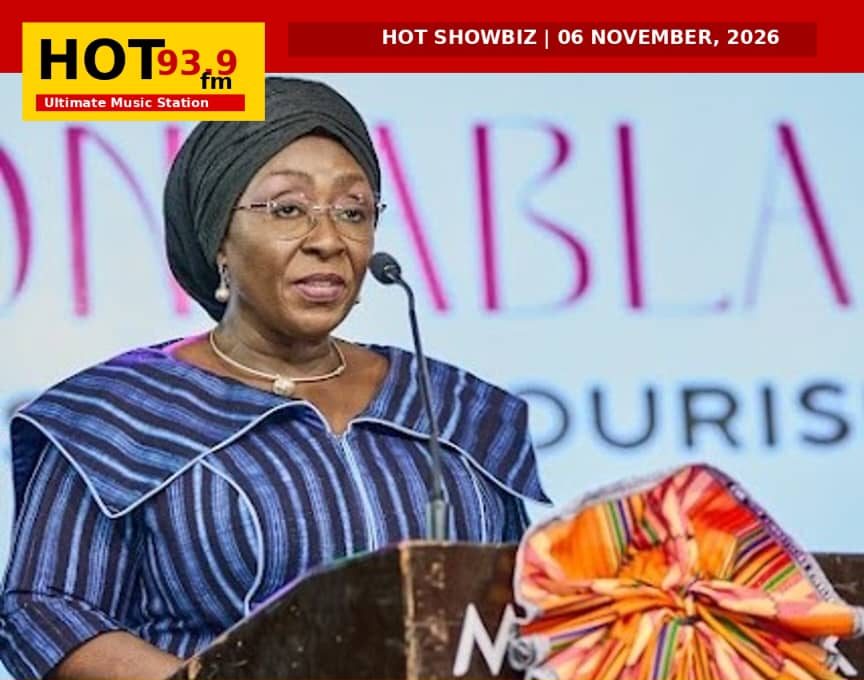

The Minister of Tourism, Culture and Creative Arts, Abla Dzifa Gomashie, has called for greater investment in Ghana’s fashion industry, describing it as a strategic pillar of the country’s creative economy with the potential to generate employment, attract investment and boost tourism.
She said the industry must be developed beyond the glamour of fashion shows and runways to encompass the entire value chain, including textile production, garment manufacturing, tailoring, marketing, retail and international distribution.
Speaking at the 2026 Black Star Fashion Summit at the Mövenpick Ambassador Hotel in Accra on Wednesday, November 4, she said Ghana’s rich cultural heritage, indigenous textiles and growing pool of creative talent provided a strong foundation for building a globally competitive fashion industry. (Read also: Maiden Black Star Fashion Summit opens in Accra)
The summit, held under the theme, “Put Ghana On”, forms part of the maiden Black Star Fashion Week, organised under the Black Star Experience initiative.
Mrs Gomashie said fashion was more than what people wore, describing it as a powerful expression of identity, heritage and national aspirations.
She cited Kente, Fugu, Adinkra symbols, traditional weaving, beadwork and embroidery as cultural resources that could inspire innovation and create economic opportunities for local designers and artisans.
“Fashion must be recognised as a strategic pillar of Ghana’s creative economy. It has the potential to generate employment for our youth, stimulate entrepreneurship, attract investment, increase exports and strengthen our international cultural influence,” she stated.
She said the government recognised the interconnectedness of fashion, culture and tourism, and called for deliberate efforts to integrate fashion experiences into the country’s tourism offerings.
She explained that international visitors could contribute to local livelihoods by purchasing locally made garments, commissioning Ghanaian designers and visiting traditional weaving and bead-making communities.
“Our ambition must be to make Ghana a destination where people come not only to see our attractions but also to experience our creativity, engage with our culture and invest in our creative industries,” she said.
Mrs Gomashie also acknowledged the contributions of pioneering and contemporary Ghanaian designers, including the late Kofi Ansah, Christie Brown, Ozwald Boateng, Duaba Serwa, Pistis Ghana, House of Paon and Abrantie the Gentleman.
She urged designers, manufacturers, investors, financial institutions, educational institutions and development partners to collaborate to build an industry that was commercially successful, culturally authentic and globally competitive.