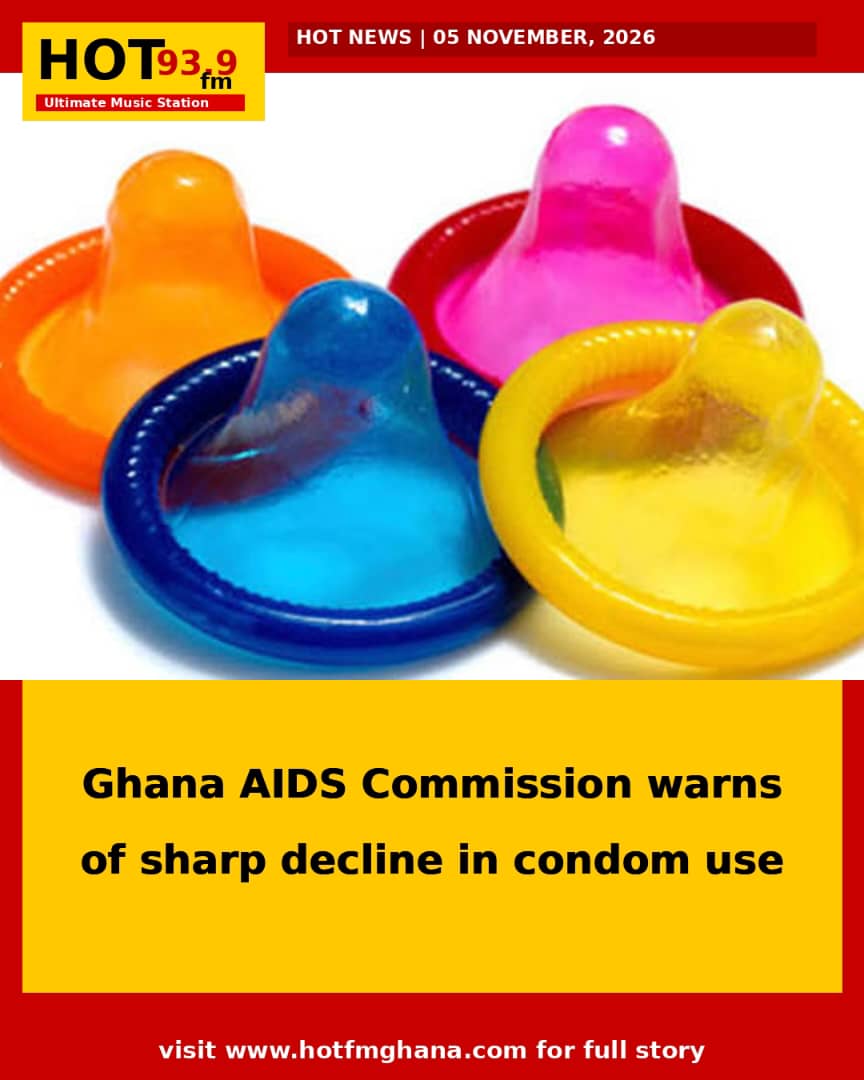



The Ghana AIDS Commission (GAC) has warned that declining condom use among adults engaging in higher-risk sexual activity and persistent discrimination against people living with HIV could undermine Ghana’s efforts to end AIDS as a public health threat by 2030.
The Commission says the trends pose a threat to efforts to reduce new HIV infections, despite progress made in controlling the epidemic.
Speaking at the 15th National HIV and AIDS Partnership Forum in Accra, Director of Research, Monitoring and Evaluation at the GAC, Isaiah Doe Kwao, said changing sexual behaviour and negative societal attitudes towards people living with HIV remained major concerns.
“Although the country has recorded progress in reducing new HIV infections, changing sexual behaviour and negative societal attitudes towards people living with HIV could undermine prevention efforts and the gains made over the years,” he said.
Among men who reported higher-risk sexual activity, condom use dropped from 49% in 2003 to 47.4% in 2008, 40.6% in 2014 and 27.4% in 2022.
The decline was more pronounced among women, with condom use falling from 29% in 2003 to 26.9% in 2008, 17.8% in 2014 and 10.6% in 2022.
The figures indicate that by 2022, fewer than three in 10 men and about one in 10 women who engaged in higher-risk sexual activity had used condoms during their last such encounter.
The survey also recorded an increase in higher-risk sexual behaviour among sexually active adults over the period.
Among men, the proportion reporting such behaviour increased from 10.2% in 2003 to 11.5% in 2008, 14.2% in 2014 and 15.1% in 2022.
For women, the figure rose from 1.1% in 2003 to 1.0% in 2008, 1.3% in 2014 and 2.2% in 2022
“The combination of increasing reported higher-risk sexual activity and declining condom use presents an important concern for HIV prevention, particularly as the country works towards ending AIDS as a public health threat by 2030,” he said.